
|
| Introducing Multi Threat URL Detection |
| 7/23/2026 - Brian O'Neill |
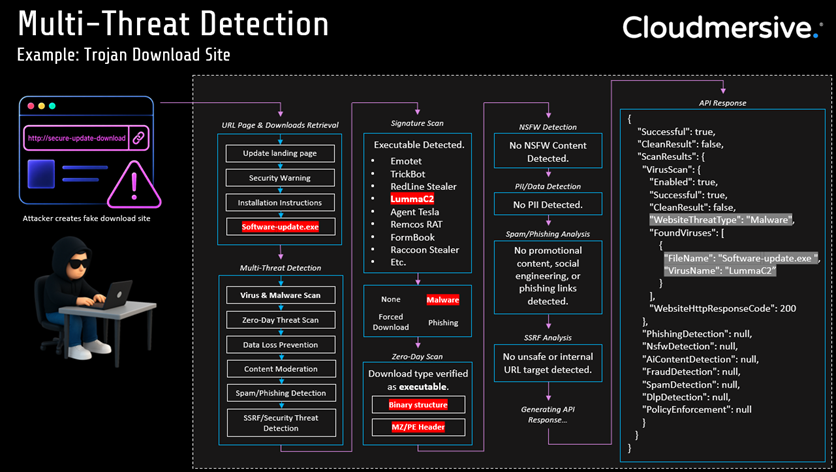
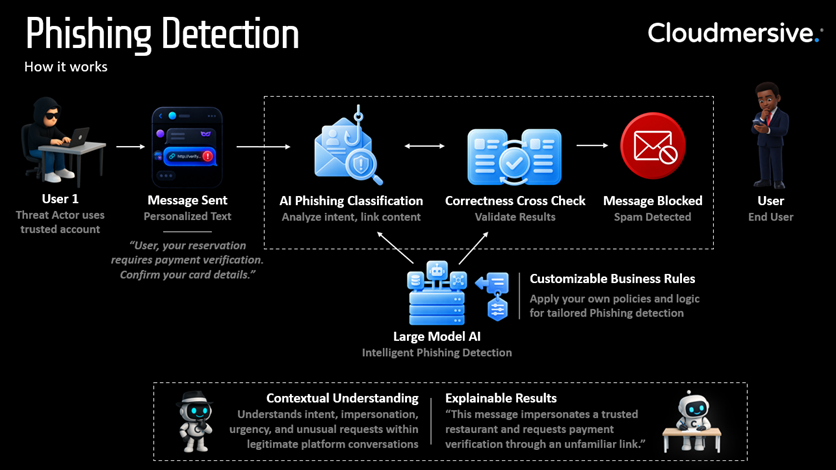
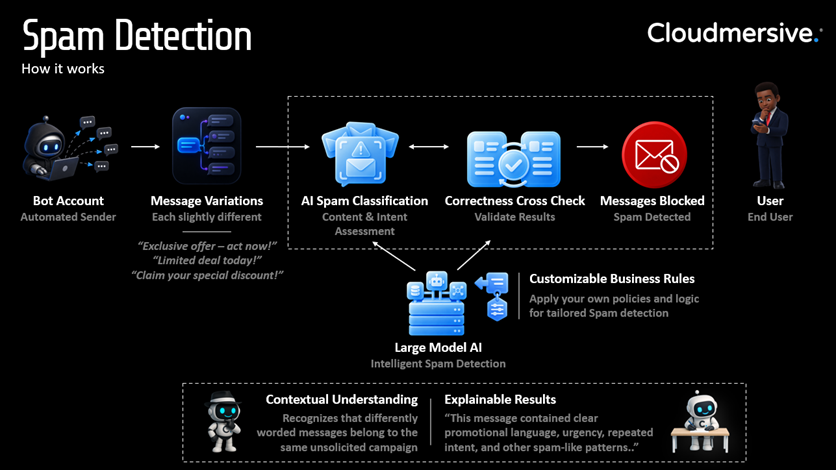
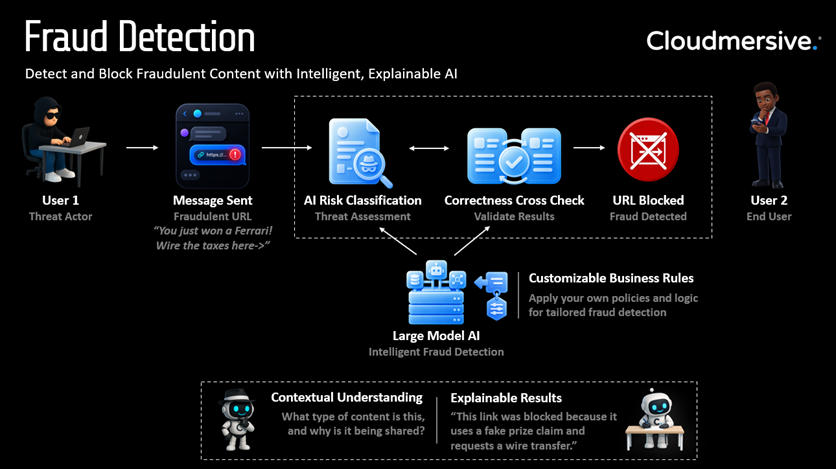
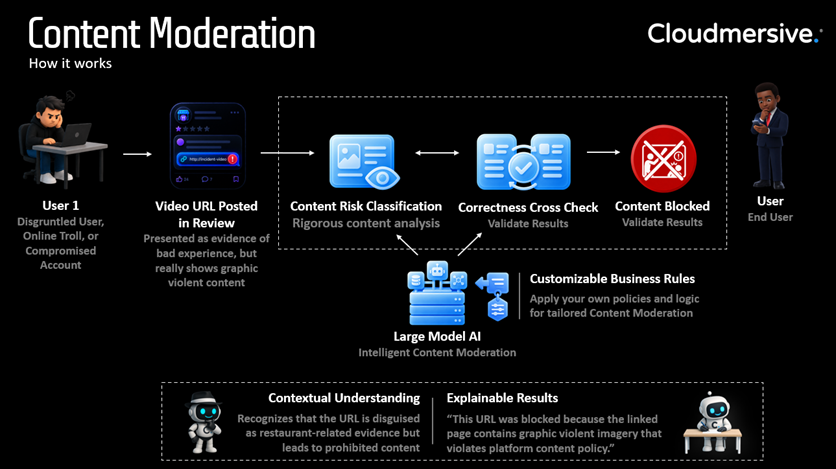
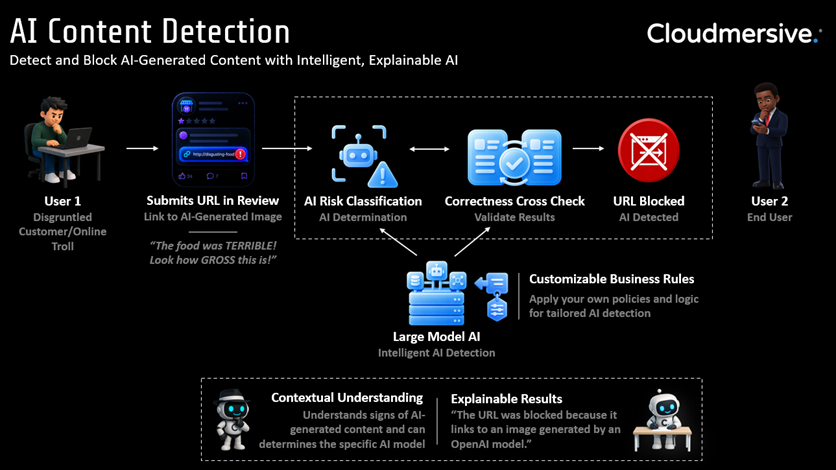
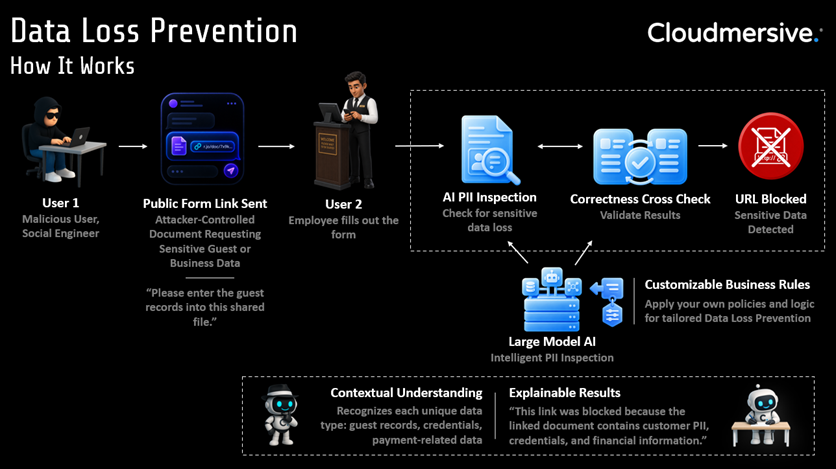
A bad URL can carry far more than a phishing pageURLs move through nearly every enterprise workflow. They arrive in emails and chat messages, appear inside documents, get submitted through forms, and show up in support tickets, user profiles, reviews, API requests, and collaboration tools. In many cases, those links are accepted from an external source and placed somewhere an employee, customer, or automated system is expected to trust them. That creates a much broader security problem than phishing alone. A URL might lead to a malware download, direct an application toward an internal network resource, expose sensitive information, host fraudulent or inappropriate content, or carry instructions designed to manipulate an AI system. The page might look clean while a linked file or secondary URL contains the real threat. We’re excited to introduce the Cloudmersive Multi-Threat URL Detection API: a flexible way to evaluate these risks through one configurable API call and return one unified result before a URL moves deeper into a workflow. Why single-purpose URL checks leave openingsTraditional URL security controls tend to answer a narrow question: is this domain known to be malicious? That signal is useful, but it can’t possibly account for everything a URL contains, where it resolves, what it downloads, or what the content is trying to accomplish. Consider, for example, a URL submitted through a customer-facing support form. The domain may have no negative reputation, but the page could still contain a convincing credential request. It might initiate a malware download, collect payment information under fraudulent pretenses, expose regulated data, or redirect an automated application toward a private network target. A clean domain reputation doesn’t make any of those outcomes safe. Trying to close each opening with a different point solution creates another problem. Every additional threat category introduces a new integration, response format, policy model, and operational dependency. Security teams end up stitching together separate checks for malware, phishing, fraud, data loss, content moderation, SSRF, and emerging AI threats when the workflow really needs exactly one answer: should this URL be trusted? One API call, multiple layers of URL defenseThe Cloudmersive Multi-Threat URL Detection API brings those checks together behind a single endpoint. Organizations can enable the protections relevant to their environment, apply their own policies, and receive an overall This provides broad coverage without forcing every URL through an identical policy. For example, a public messaging platform might prioritize phishing, spam, fraud, and inappropriate content, while an internal AI workflow might focus on prompt injection, sensitive data exposure, and policy violations. A server-side integration accepting user-supplied URLs might enforce strict SSRF controls and advanced malware scanning. The Multi-Threat URL Detection API can accommodate all three scenarios. Virus and advanced file threat detectionThe API can scan a URL for viruses and malware and optionally download the linked file for deeper inspection. Advanced scanning can identify embedded executables, scripts, macros, invalid files, password-protected content, unsafe archives, OLE embedded objects, XML external entities, insecure deserialization patterns, HTML, and unwanted actions. Organizations can also restrict accepted file formats and apply Authenticode signing requirements. That means a workflow can enforce exactly what it expects to receive instead of treating every technically reachable file as acceptable. SSRF detectionUser-supplied URLs can be abused to make server-side applications access resources they were never meant to reach. The SSRF detection layer can identify risky URL behavior involving internal hosts, private network targets, IP-literal hosts, embedded credentials, unencrypted connections, and specialized URL schemes. The response includes whether an SSRF threat was identified, the relevant threat types, and whether DNS resolution succeeded. This gives applications the context they need to reject dangerous requests before the destination is accessed downstream. Phishing and spam detectionPhishing detection evaluates URL content for phishing intent rather than exclusively relying on surface-level reputation signals. The response can identify phishing attempts, unsolicited sales content, promotional material, and other relevant threat types while returning a risk level and plain-language analysis rationale. Spam detection adds another layer for organizations that need to manage unwanted promotional content and repetitive or deceptive campaigns. These controls are especially useful in messaging, chat, form, review, and community workflows where links can be distributed directly to other users. Fraud detectionA URL can lead to far more than a fake login page. It can host fraudulent invoices, fabricated offers, altered agreements, deceptive payment requests, or AI-generated documents designed to carry financial or legal weight. The fraud detection layer evaluates downloaded content for overall fraud risk. It can identify signals involving financial liability, sensitive information collection, asset transfers, purchase agreements, employment agreements, expired documents, and, crucially, AI-generated content. It also returns a document classification and analysis rationale to help reviewers understand why the content was flagged; this is critical for keeping experienced human evaluators on the same page. Content moderationOrganizations hosting user-submitted URLs also need to account for the content those links expose to employees and customers. The content moderation layer can evaluate linked content for nudity, graphic and non-graphic violence, self-harm, hate, potential illegal activity, medical imagery, and profanity. Each organization can (and should) define its own tolerance for these categories. A healthcare platform, for example, may accept medical imagery that would be inappropriate in most other general-purpose collaboration environments. Configurable thresholds and category-level controls make that distinction enforceable through the Cloudmersive Management Portal. AI-generated content and prompt injectionThe API can identify AI-generated linked content and return supporting details including a confidence level, verdict, detected file type, and—when available—the provider or generator associated with the content. Prompt injection detection addresses a separate AI-era risk: content designed to manipulate an AI model or agent into ignoring its intended instructions. For applications that retrieve URLs and pass their contents into automated AI workflows, this check creates an important control before untrusted web content reaches the model. DLP (Data loss prevention)Not every dangerous URL brings a threat into the organization. Some expose sensitive information that should never have been made available in the first place. The DLP layer can detect a wide range of sensitive content, including personal information, financial identifiers, health information, credentials, authentication tokens, private keys, source code, network identifiers, and other regulated or confidential data. The response can also include an analysis rationale, giving security and compliance teams more context than a simple pass-or-fail result. Custom policies keep URL security aligned with the businessCloudmersive customers can create and manage custom threat detection policies in the Cloudmersive Management Portal. Those policies can reflect the organization’s actual risk tolerance, accepted content, and business requirements rather than forcing every team to operate under one generic definition of “unsafe.” Applications can reference the appropriate configuration using a The API response reflects the results of those customized standards directly. Policy enforcement results include an overall violation risk score, while individual rule violations return their own risk scores and rationales, making it clear how the selected policy affected the scan result. For example, a customer-facing marketplace could reject unsolicited promotional links and AI-generated fraud while allowing ordinary commercial content. An internal document workflow could apply stricter DLP rules around credentials, source code, and regulated information. A healthcare application could permit medical imagery while continuing to block other inappropriate content categories. Because those decisions are managed as policies, organizations can adjust their controls as requirements change without rebuilding the URL inspection layer from scratch. Where Multi-Threat URL Detection fits in your workflowsSimply put: URL inspection belongs anywhere an untrusted link can influence a person, an application, or an automated process. Inbound email and messaging are obvious starting points, but the same risk appears in uploaded documents, support tickets, web forms, customer profiles, marketplace listings, reviews, collaboration tools, content management systems, and API inputs. It also appears in AI workflows that retrieve external pages and use the returned content as context for a model or agent. Cloudmersive’s flexible API platform makes it possible to apply the same protection across all these surfaces. Instead of building and implementing a different URL security stack for each application, organizations can integrate one API, enable the detection layers each workflow needs, and standardize the response used to make downstream decisions. Deployment optionsLike all Cloudmersive APIs, the Multi-Threat URL Detection API is available across the full range of deployment options described below. Enterprises can integrate it wherever it fits best in their existing architecture and under the regulatory, security, or data governance requirements that apply to their environment. Managed InstanceDeploy on dedicated, Cloudmersive-managed infrastructure with SLAs, customizable configuration, and enterprise security controls. Private CloudDeploy on your own premises or within a cloud platform of your choice for direct control over infrastructure and data. Public CloudUse Cloudmersive’s multi-tenant public cloud offering for straightforward, scalable API access. PaaSDeploy through Azure App Service or Azure Kubernetes Service. Government CloudDeploy in a specified government cloud region to support the data governance requirements of government entities. Get started with Multi-Threat URL DetectionURLs are one of the most common ways external content enters a trusted workflow, and the risk attached to them is rarely limited to one threat category. Cloudmersive Multi-Threat URL Detection gives organizations one flexible integration for detecting malware, phishing, SSRF, spam, fraud, inappropriate content, sensitive data, AI-generated content, prompt injection, and custom policy violations before a link can cause damage. To learn more, visit the Cloudmersive API documentation for technical details and examples. If you have questions about policies, integration, deployment, or how Multi-Threat URL Detection would fit into your environment, contact our sales team. |
Sign Up Now or 

 Blog
Blog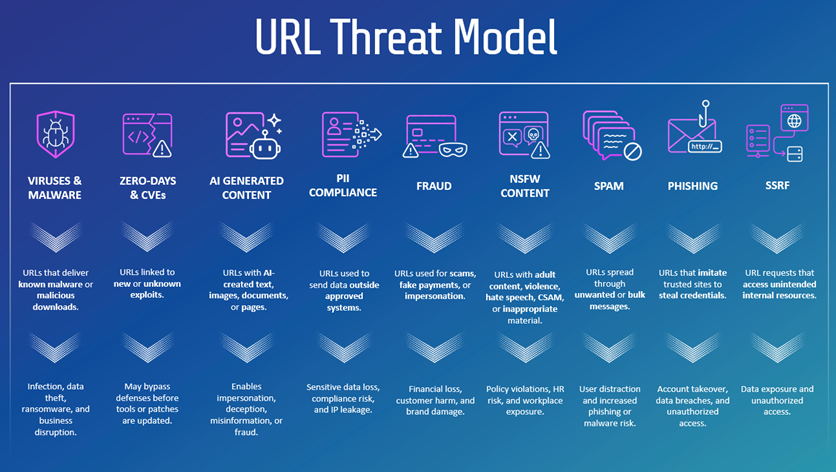
 Virus Scan APIs
 Content Disarm and Reconstruction APIs
 Spam Detection APIs
 Document Conversion & Processing APIs
 Document AI APIs
 Natural Language Processing (NLP) APIs
 Optical Character Recognition (OCR) APIs
 Image and Face Recognition and Processing APIs