
|
| Catch AI Generated Fraud with Cloudmersive Multi-Threat Detection |
| 5/13/2026 - Brian O'Neill |
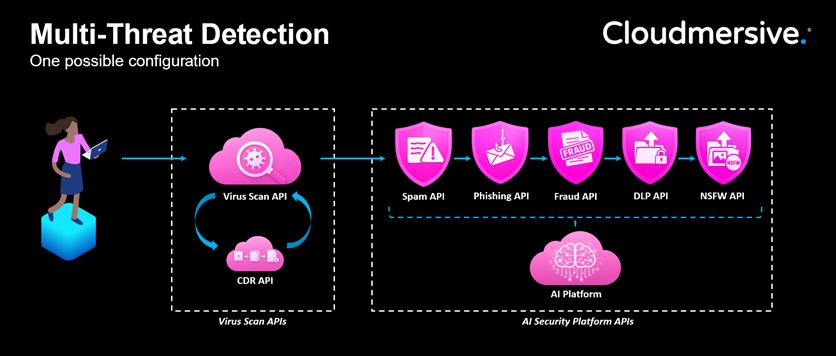
AI generated document fraud is already inside your workflowsDefrauding a company with an altered document used to require meaningful effort. That meant a crude attempt at adjusting a receipt total, for example, would inevitably leave detectable traces. Today, generative AI has completely changed the game. GenAI tools make it possible to add precise, targeted alterations to existing documents with very little effort at all. Changing that receipt total isn’t so difficult anymore, and neither is bumping up that invoice total by a few hundred dollars. Even legal contracts can end up with AI-amended terms. In all these cases, the base document is real; the changes are seamless; and nothing about the resulting altered document triggers a standard fraud review process. This is the fraud scenario that’s proliferating right now, and it’s the one that traditional fraud detection tools weren’t built to catch. Why traditional fraud detection misses altered documentsTraditional fraud detection tools typically look for structural anomalies in documents like formatting inconsistencies and suspicious metadata. Against a document that started as a legitimate file and was altered subtly with AI, that approach has very little to flag. The new document’s formatting is consistent because most of it is the same as the original document, and the metadata is probably clean. The result of this mismatch between policy and threat is that a fraudulently altered document reliably passes standard programmatic review. It looks essentially identical to the real thing, and that means it’s also unreasonable to expect human reviewers to close that gap. The only meaningful difference between the new and the original is the content itself, and checking for fraud at that level requires a different kind of detection policy entirely. How the Cloudmersive AI Fraud Detection API addresses GenAI fraudThe Cloudmersive AI Fraud Detection API evaluates documents for fraud risk using an advanced AI model. This analyzes meaning, visuals, semantic context, and a range of other cues. The API’s response goes far beyond a simple binary result. It returns a For tighter control, the API supports customizable fraud policies which define the specific standards enforced in a given enterprise environment. Optional user context inputs (e.g., including verified email addresses in the request) allow the model to factor the submitter into the overall risk assessment, which can help work out cases where the document itself is ambiguous. Where the AI Fraud Detection API fits in your workflowsToday’s fraudsters target any workflow where submitted documents carry financial or legal weight. That might mean vendor invoice processing, contract management, HR intake, customer onboarding, accounts payable, or other similar areas. These workflows all take the most direct damage from altered documents, and they tend to lean on human review the most, too, which is no longer a reliable safeguard. For organizations running Cloudmersive Multi-Threat Detection, AI Fraud Detection fits naturally after virus scanning in document processing pipelines. If a submitted document contains malware, the Virus Scan API will block it right way. If the document is free of malware but altered, Fraud Detection will flag it right after. Deployment optionsLike all Cloudmersive APIs, the AI Fraud Detection API is available across the full range of deployment options listed/described below. Managed InstanceThese deployments leverage dedicated, managed infrastructure with SLAs, customizable deployment, and security. Private CloudThese deployments can take place on the customer’s premises or in a cloud platform of their choice. Public CloudThese deployments leverage Cloudmersive’s multi-tenant public cloud offering. PaaSThese deployments take advantage of Azure App Service or Azure Kubernetes Service offerings. Government CloudThese deployments take place in a specified government cloud region, suiting the data governance requirements of government entities. Get started nowGenAI document alteration is the hardest fraud vector to catch because it starts with something real. Cloudmersive AI Fraud Detection is the second main pillar of Cloudmersive Multi-Threat Detection, and it’s built to catch those threats reliably along with traditional fraud cases. To learn more about the AI Fraud Detection API, visit our documentation or API console for technical details and code examples. For expert advice, or to book a Multi-Threat Detection demo with your data, reach out to a member of our team. |
Sign Up Now or 

 Blog
Blog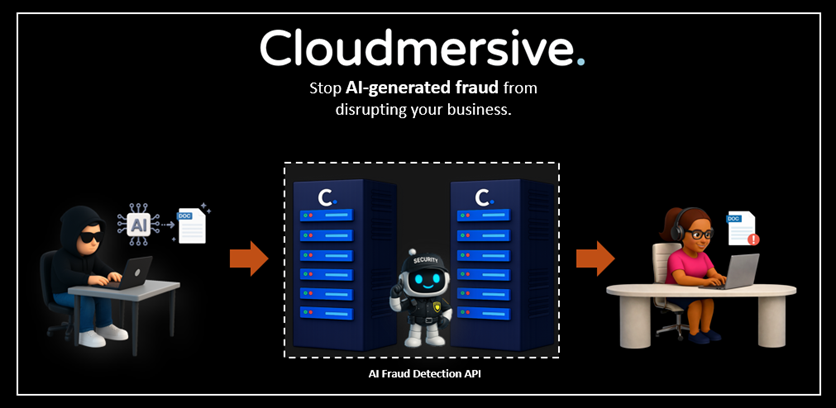
 Virus Scan APIs
 Content Disarm and Reconstruction APIs
 Spam Detection APIs
 Document Conversion & Processing APIs
 Document AI APIs
 Natural Language Processing (NLP) APIs
 Optical Character Recognition (OCR) APIs
 Image and Face Recognition and Processing APIs